
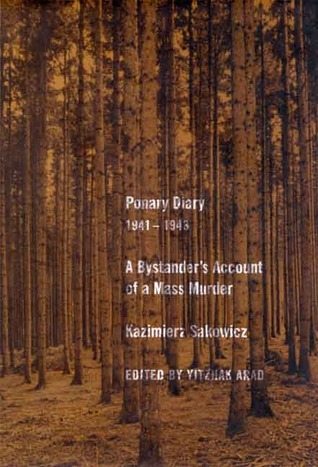
Ponary Diary, 1941-1943: A Bystander’s Account of a Mass Murder
- Author: Kazimierz Sakowicz, translated by Laurence Weinbaum, edited by Yitzhak Arad
- Genre: History
- Publication Date: December 10, 2005
- Publisher: Yale University Press

About sixty thousand Jews from Wilno (Vilnius, Jewish Vilna) and surrounding townships in present-day Lithuania were murdered by the Nazis and their Lithuanian collaborators in huge pits on the outskirts of Ponary. Over a period of several years, Kazimierz Sakowicz, a Polish journalist who lived in the village of Ponary, was an eyewitness to the murder of these Jews as well as to the murders of thousands of non-Jews on an almost daily basis. He chronicled these events in a diary that he kept at great personal risk.Written as a simple account of what Sakowicz witnessed, the diary is devoid of personal involvement or identification with the victims. It is thus a unique document: testimony from a bystander, an “objective” observer without an emotional or a political agenda, to the extermination of the Jews of the city known as “the Jerusalem of Lithuania.” Sakowicz did not survive the war, but much of his diary did. Painstakingly pieced together by Rahel Margolis from scraps of paper hidden in various locations, the diary was published in Polish in 1999. It is here published in English for the first time, extensively annotated by Yitzhak Arad to guide readers through the events at Ponary.

I grew up reading and learning about the Holocaust from my youngest years. My father was a Holocaust survivor from Poland, and I don’t ever remember a time when I didn’t know about it, even in my early memories. I was raised on his stories of survival as an intact family by hiding out in the forests, graveyards, hay stacks, or anywhere they possibly could to survive another day. In 2018, we knew my father’s pancreatic cancer had been progressing, and his doctor told us that if we wanted to take a big trip, that was the time to do it, before he got any weaker.
He didn’t bring me to see his childhood home in Poland, he didn’t bring me to see where he spent his childhood hiding in fear of extermination. He brought me on a trip to Israel: the very first country where he wasn’t hated for being a Jew. He wasn’t a minority. It is in Israel that the first pictures of my father were taken in his life that he was photographed with a smile on his face, when he was already a teenager, who had survived a genocide that killed 6 million Jews, and 90% of the Jewish people in Poland.
In Israel, we made it a priority to visit Yad Vashem (English translation: A Memorial and a Name), an incredibly moving Holocaust Museum. I cried a lot, but by the time we left, everyone had tears in their eyes. The museum itself is a stark, geometric concrete structure, that feels almost claustrophobic as you walk through, following the path designated, with the walls seeming to close in around you as the Holocaust goes on. One of the most memorable parts of the visit was when my father pointed out a poem written about the Ponary Massacre. This was written by Alexander Wolkowyski and translated into Yiddish with two stanzas added by Shmerke Kaczerginski while they were held in the Vilna Ghetto:
“Quiet, quiet, let’s be silent,
Graves are growing here.
They were planted by the enemies,
See their bloom appear.
All the roads lead to Ponar now,
There are no roads back.
Papa too has vanished somewhere
And with him our luck.”
I felt like it was finally time to learn more about this little-known massacre that killed the Jews of Vilna, known as ‘the Jerusalem of Lithuania.’ The Ponary forest, just a little over 6 miles outside of the city of Vilna, was used to forage mushrooms and berries, as well as for holidays and recreation. There were wide, deep pits with embankments that the Soviets were planning to use for fuel storage, but abandoned the site when the Germans advanced into Lithuania.
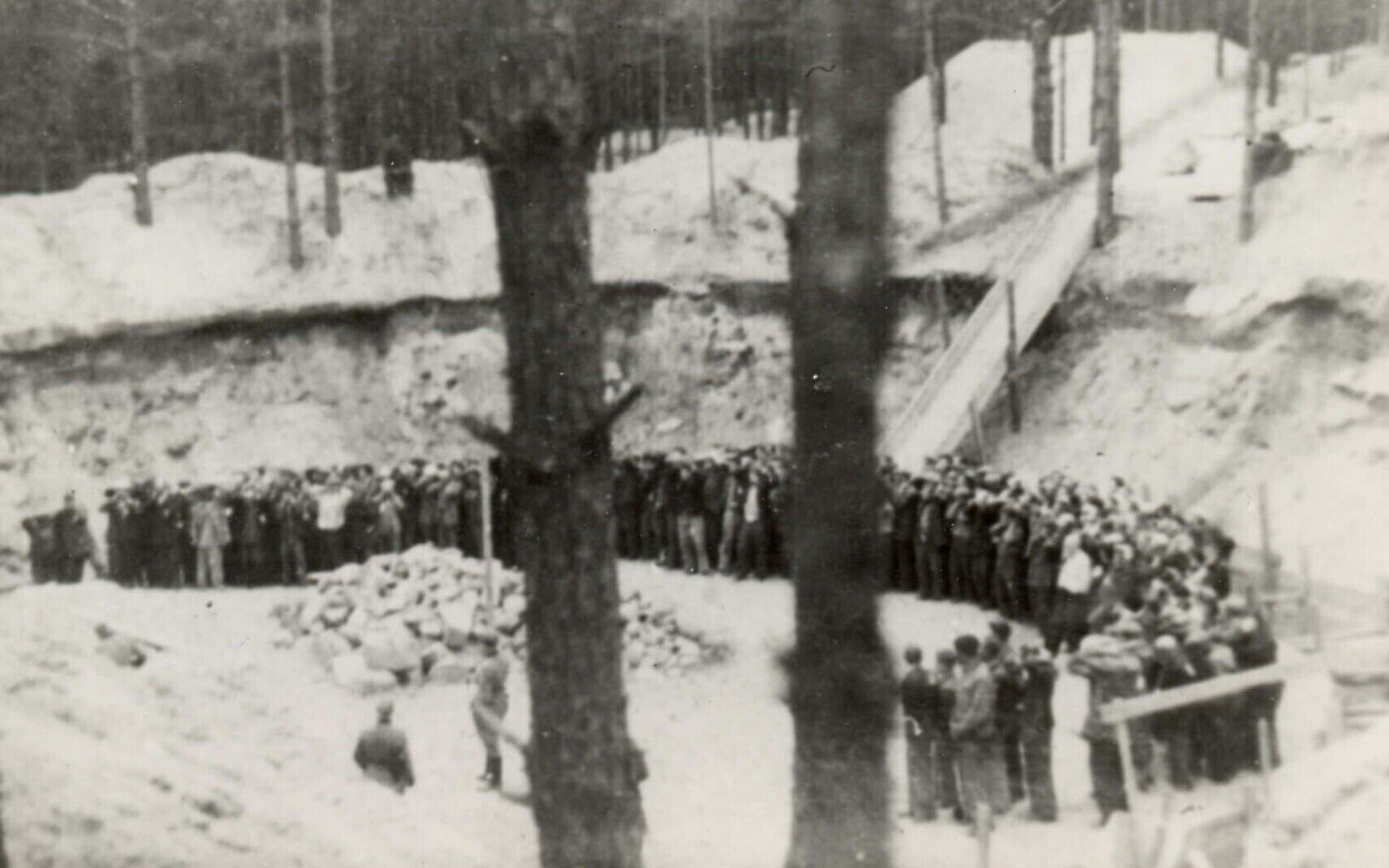
Before I even started, I knew that it was going to be a difficult read. But I had no idea quite how difficult until I started reading. To start with, the author was a Polish man living in Ponary, who kept this diary and buried the pages in empty lemonade containers. He was shot dead while riding his bicycle in 1944. The deliberate choice of the word ‘a bystander’s account’ was appropriate—Sakowicz writes about the shooting deaths of about 70,000 Jewish men, women, and children with complete detachment, and maintains that distance even when the deaths included Soviet POWs and Poles.
Due to the fact that the diary is incomplete, and the entires assume that the reader knows what was going on overall. Instead, it was edited to include the historical timeline of events, as well as the different factions operating in the forest—Soviet partisan, Jewish people in hiding or part of resistance organizations, and Polish resistance members. It was much appreciated, so that I could understand the changing landscape.
It didn’t take long for me to be shocked. The very first entry stood out to me as a sign of his detachment from what he was writing about:
“July 11
Quite nice weather, warm, white clouds, windy, some shots from the forest. Probably exercises, because in the forest there is an ammunition dump on the way to the village of Nowosiolki. It’s about 4 P.M.; the shots last an hour or two. On the Grodzienka [Wilno-Grodno high road] I discover that many Jews have been “transported” to the forest. And suddenly they shoot them. This was the first day of executions.”
What he is describing here is Operation Barbarossa, the German invasion of the Soviet Union, and what has included the Holocaust by Bullets. Around 70,000 Jews were brought into the forest, stripped, beaten into the pits, and shot by Germans and their Lithuanian collaborators.
I could only wonder what the author was thinking while journaling a mass murder in real time. None of us know what we would do in that situation, but even keeping these notes was enough to get him killed. I can’t imagine writing about being able to see truckloads of people stripped, beaten, and then murdered, and I couldn’t even conceive of how he was able to write about it in such a detached way, talking about the weather before segueing into carloads, then truckloads, and finally train cars full of human beings to be exterminated.
His bias shines through, referring to Soviets hiding in the forests as ‘partisans,’ while referring to Jews hiding in the forest as ‘bandits.’ He doesn’t seem to feel anything towards the massacre he saw: while 70,000 Jews were being systematically shot, even when Poles and Soviet POWs were added to the death rolls. I would have liked to know what he was thinking and feeling while writing these entries, and if he wondered if someday he would be next. I wondered why he even recorded it—to document a historical event? His own unique type of resistance to an oppressive and constantly threatening dictatorship?
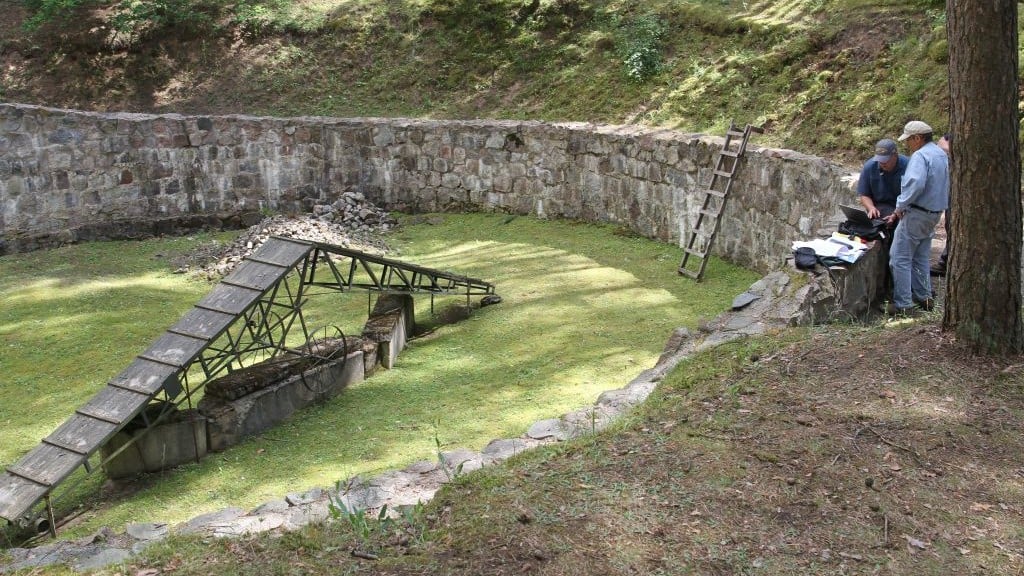
For me, the most horrifying part of this was that a flourishing community of people who lived there, worked there, studied there, and loved there for hundreds of years was able to be almost completely exterminated with indifference from the non-Jewish friends and neighbors, for the most part. This wasn’t an easy read, but I felt like it was a really important one. My father told me that during the Holocaust, his family made a promise that if any of them survived, they would bear witness. I was raised with my father speaking about his own experiences in public settings every chance he got, and seeing him be so willing to revisit the worst years of his life on a regular basis inspired a strong drive for me to continue to read Holocaust memoirs and nonfiction accounts. If you can handle it, this short read is well worth the time. If not, I strongly suggest picking up another nonfiction about the Holocaust.
Disclaimer: This post contains affiliate links, and I may earn a small commission at no cost to you if you purchase through my links.
Categories: Book Review
 Leah's Books
1 reply »