

Ghosts of a Holy War: The 1929 Massacre in Palestine That Ignited the Israeli-Palestinian Conflict
- Author: Yardena Schwartz
- Genre: Nonfiction History
- Publication Date: January 14, 2025
- Publisher: Oasis Audio

An award-winning journalist presents an even-handed, thoroughly researched examination of the Arab-Israeli conflict, and illustrates how a shocking yet little-known massacre one century ago in what was then Palestine became ground zero of a war that continues to devastate.
“[A] compelling story. . . . If you are going to read one book to help you understand the current Middle East tragedy, this is it.”—Yossi Klein Halevi, senior fellow, Shalom Hartman Institute, and author of the New York Times bestseller Letters to My Palestinian Neighbor
In 1929, in the sacred city of Hebron—then governed by the British Mandate of Palestine—there was no occupation, state of Israel, or settlers. Jews and Muslims lived peacefully near the burial place of Abraham, patriarch of the Jewish and Arab nations, until one Saturday morning when nearly 70 Jewish men, women, and children were slaughtered by their Arab neighbors. The Hebron massacre was a seminal event in the Arab-Israeli conflict, key to understanding its complexities. The echoes of 1929 in Hamas’s massacre of October 7, 2023, illustrate how little has changed—and how much of our perspective must change if peace is ever to come to this tortured land and its people, who are destined to share it. Noted journalist Yardena Schwartz draws on her extensive research and wide-ranging interviews with both sides to tell a timely, eye-opening story. She expertly weaves the war between Israel and Hamas into a historical framework, demonstrating how the conflict today cannot be understood without the context of ground zero of this century-old war, which began long before the occupation, the settlements, or the state of Israel ever existed.
This meticulously researched and balanced examination of the Arab-Israeli conflict’s origins interweaves historical analysis with contemporary insights, providing crucial context for understanding today’s Middle East tensions. Perfect for anyone who has read Ilan Pappe, Noa Tishby, or Rashid Khalidi, Schwartz’s work is a riveting exploration of the complex background of the Israel-Palestine conflict and the ongoing struggle for peace in the region.

This book came to my attention when it was featured on a list of recommended books from one of my favorite content creators who provides education on Jews as well as Israel. In case you’re interested in learning more, I highly recommend checking out her blog here. I’m not new to learning about Jewish history both in Israel and in the diaspora, but I always learn something from Debbie, and especially respect her ability to provide balanced, fair, and factual information on her educational posts. This is something I’m confident saying, since she lists her sources. Schwartz’s book is one that I’ve seen listed as a source, and I went into this hoping to learn more about how this mostly overlooked event influenced the present conflict. After reading, I was even more blown away, and have been recommending this to everyone.
Hebron is a city that is located in modern-day West Bank (also known as Judaea and Samaria), and is meaningful to both Jews and Muslims. Jewish history in Hebron dates from Biblical lines to present day, with it being especially revered for being the location of the tomb of the Patriarchs (Abraham, Isaac, and Jacob, and their wives, Sarah, Rachel, and Leah). There is also a long history of Muslim presence in Hebron, and it is currently under joint control of Israel and the Palestinian Authority. Jews, Christians, and Muslims have lived side by side in Hebron for centuries in relative peace.
But one Saturday morning in 1929, the Arab residents rose up and massacred their Jewish neighbors, who were able to identify them by name. Babies were killed, girls and women were raped, and men were tortured and mutilated. The British mandate police were aware of the massacre, but didn’t present with a show of force, and didn’t even really get involved until one of them was injured by the Arab rioters. Christian neighbors were able to avoid any carnage by painting a cross on their doors.
What led to this massacre, and how it carries over into current events, as well as relations between Israelis and Arab Muslims, are the central questions that Schwartz tackles in this book. She takes her journalism skills and applies them to this book in the best possible way. This is one of those nonfiction books that don’t read like nonfiction—the narrative is anything but dry, and she quickly engages readers by talking about the different individuals who were in Hebron up to and after the riots.
Schwartz discusses the vital role that Mohammed Amin al-Husseini, the Grand Mufti of Jerusalem between 1921 and 1937, played in the contentious relations between Arabs and Jews in the British Mandate for Palestine. He used his position to promote adherence to Islam, incite hate against Jews, and push for Palestinian nationalism and anti-Zionism. He was perhaps best known for his partnership with Hitler and his admiration of genocide, even creating an Arab Muslim SS division. The infamous White Paper which limited Jewish immigration to the British Mandate for Palestine was a direct consequence of his advocacy, and led to Jews being unable to escape antisemitic violence in Europe.


For more than a century, Jews have been targeted by Arabs. But this massacre predates Israel, predates Jewish sovereignty in our ancestral homeland, and predates a population that refer to themselves as Palestinian Arabs—under the British Mandate, Palestinian was a title that only the Jews identified with, while the Arabs preferred to be called Arabs. So what caused a population to turn against their friends and neighbors in such a violent way? The central lie that contributes to Jew hatred amongst Arabs: that the Jews are plotting to take al-Aqsa mosque and Arabs are needed to defend al-Aqsa. This type of rhetoric has carried over right into today’s conflict, with violent clashes always coming after Palestinians have been called on to ‘defend al-Aqsa from the Jews.’ The most recent time this has been used was on October 7th, where the attack was even called ‘al-Aqsa flood,’ creating a direct linkage with al-Husseini’s Jew-hate and the long history of Arab attacks on Jews after claims of threats to al-Aqsa.
It’s tough saying that I have a ‘favorite’ aspect of this book, but I especially admired Schwartz’s talent at sharing a balanced picture that aims to remove as much bias as possible. Hearing Schwartz not only confirm the Jewish history in the Levant, but also being heavily critical of both the Palestinian and Jewish leadership, and saving a heavy dose of criticism for the issue of Jewish settlers in Judaea and Samaria. While I do have a strong understanding of Israel/Palestine and have connections within both Israeli and Palestinian society, there are things that I don’t know enough about yet, and the topic of Jewish/Israeli settlers was one of them.
I listened to this as an audiobook, and the narrator, Sharon Freedman, did a fantastic job. She was able to pronounce all of the Hebrew and Arabic words and names, although I did notice that she pronounces the town of Hebron with a strange accent that I haven’t heard before, pronouncing it more like ‘Heh-broon’ than the usual ‘Heh-brun’ or even ‘chevron’ (with a hard ch sound). Aside from that one complaint, I thought she did an outstanding job with all of the foreign names and words that we don’t usually hear on a regular basis.
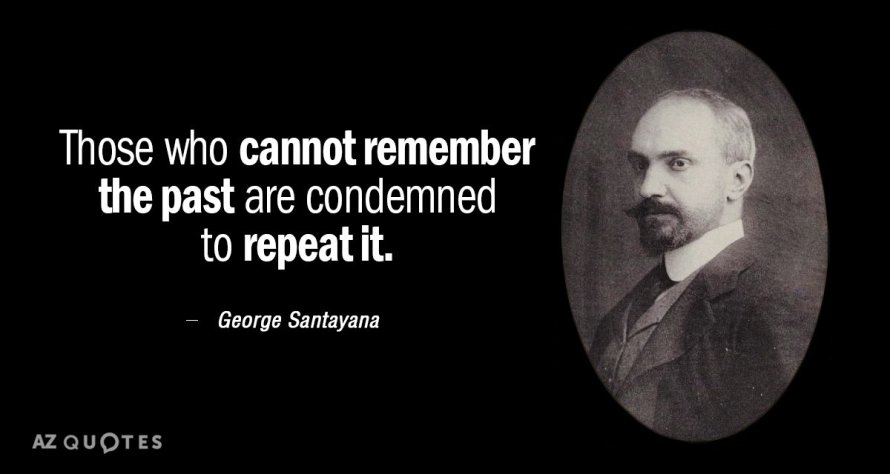
If there is one single book that you read to get an understanding of the Israel/Palestine situation, let it be this one. Schwartz stays on topic throughout the book, keeping things interesting and avoiding the tendency of history nonfiction to come across like a textbook. This is a fantastic resource, providing as balanced an account as possible, to explain the root of the conflict as well as the people affected most by it. The author takes a good, hard look at the facts and the patterns that we’ve seen throughout the years, and is able to synthesize an incredibly complex situation into understandable terms. I know there are a lot of people who claim their knowledge based on TikToks, but if you’re looking to expand your knowledge in as factual a manner as possible, this book is it. Personally, I think we can all benefit from studying history. I was raised by my father on the George Santayana quote, “Those who cannot remember the past are condemned to repeat it,” and I see that being true more than ever today. Instead of deciding who would appreciate this book the most, I’m going to just say that we can all benefit from reading this.
Disclaimer: This post contains affiliate links, and I may earn a small commission at no cost to you if you purchase through my links.
Categories: Book Review
 Leah's Books
I am going to have to add this to my TBR now!
LikeLiked by 1 person
I’m so glad to hear that! I hope you get as much out of it as I did.
LikeLiked by 1 person