
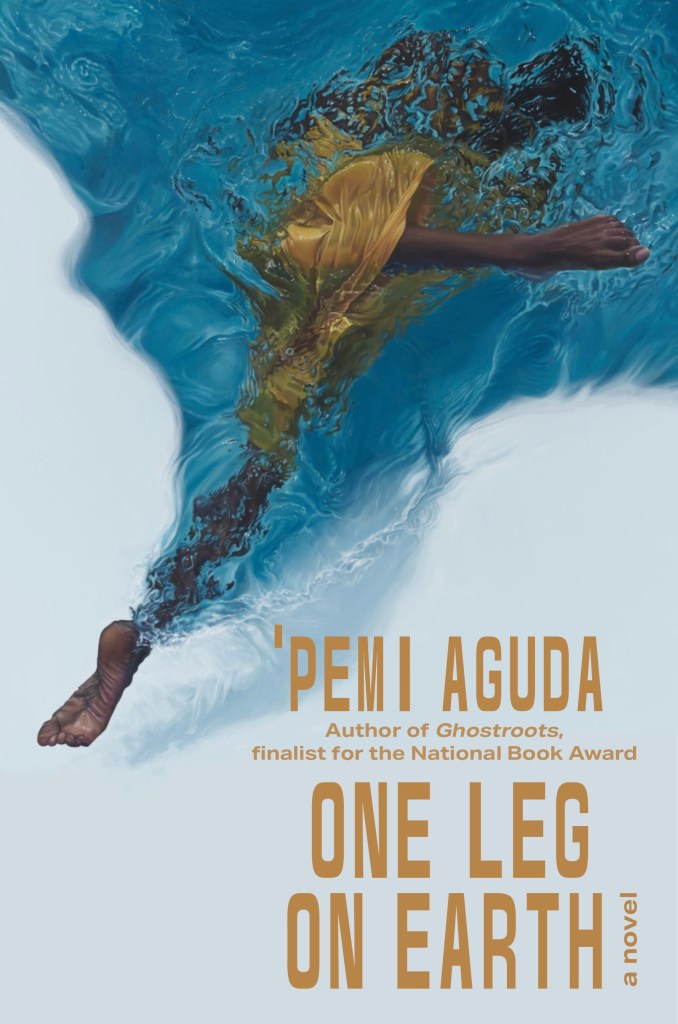
One Leg on Earth
- Author: ‘Pemi Aguda
- Genre: Horror
- Publication Date: May 5, 2026
- Publisher: W.W. Norton & Company
Thank you to Amazon Vine for providing me with a copy of this book in exchange for an honest review.

From the author of the National Book Award finalist Ghostroots, a debut novel that thrills with its eerie mix of folklore and history.
The lonely daughter of a distant mother, Yosoye arrives in Lagos ready to change her life. Weeks after she begins an internship at a fancy architectural firm, she discovers she is pregnant. Yosoye is joyful—a new life brings the hope of connection and companionship.
But an inexplicable force is haunting the pregnant women of Lagos. As construction speeds ahead on the firm’s glossy new development on land reclaimed from the ocean, stories of the uncanny deaths in the city’s open waters reach a fever pitch. Yosoye finds herself stalked by a presence she can neither ignore nor appease—without risking her unborn baby and her precarious hopes for the future.
In One Leg on Earth, ‘Pemi Aguda turns the question of who belongs in a city into an arresting exploration of what it means to be a mother in an unforgiving world, and a haunting vision of the dark side of progress.

The cover of this book is what caught my attention, with the stunning artwork on it. After the cover, I read the summary and it sounded really unique and caught my attention. I found this to be a fantastic idea, and knowing that this is Aguda’s debut novel, I was really impressed.
Yosoye moves from a small town to Lagos for an internship, and is glad for a new start to life. She’s an only child, her mother is emotionally distant, and she has been intensely lonely for her entire life. At 23, she gets placed in a position in Lagos, which is where she was hoping for. When she arrives, she decides to do things a little differently, and say yes to more activities, to be open about her desires, and to chase what she wants. She finds herself in an opportune position when she is propositioned for a one-night stand.and takes the opportunity to say yes.
But only a short time after starting her new position, she realizes that she is pregnant. It isn’t long before she starts discovering some things about Lagos that are concerning, and it effortlessly incorporates those into not only the story, but also reflecting the changes occurring within Yosoye herself. As she adjusts to her new city, she notices the capitalism and greed that work within the society, and then discovers the role played by the architectural firm she’s interning at and it changes how she feels about everything.
Against this backdrop, there is first one, then a few, then many pregnant women who are throwing themselves into the waters. Yosoye isn’t immune to it, and she hears these voices from the waters calling to her. It was fascinating how this aspect of the story was handled, with the lure of the water juxtaposed with the way Yosoye’s firm is creating new luxury housing by reclaiming sand back from the very waters that pregnant women from all over Lagos are joyfully surrendering themselves to. The water is more than a body of water—it is a sentient character within the story as well, adding another dimension of complexity and depth (no pun intended, but I’m delighted to have made one even accidentally).
Throughout the book, heavy themes come through and are portrayed sensitively. The legacy of colonialism, bodily autonomy, body horror, suicide, and such a significant gap in socioeconomic status that it feels like a pendulum swinging between the people who can afford to live in the new housing unit being built, and children begging in the streets. Each of these was threaded through the story effortlessly, and I enjoyed how the water-based folklore was also intertwined in the story.
Aguda’s writing is beautiful; lyrical and poetic and a pleasure to read. I was able to visualize the scenes, and at times, I read the audiobook version. The narrator, Délé Ogundiran, had a wonderfully lyrical accent that made it even easier to immerse myself in the story, even if her voice sounded more mature than I’d expect a woman of 23 to sound.
Overall, this book was outstanding as a debut, and I was really impressed by a lot of things about it. The writing made this an enjoyable read, and I especially enjoyed how the overall scenes playing out within Lagos are reflected in Yosoye’s own mind and body. Originally excited to move to Lagos and begin making friends to remedy the overwhelming sense of loneliness that she always carried, she ultimately realizes that Lagos isn’t going to change her sense of isolation and feeling of being hollowed out, and that hollow feeling isn’t going to be filled by the capitalist focus and drive for more, more, more. I was blown away by how the story unfolded, but at times I found it difficult to connect with Yosoye. The way Aguda used folklore to balance out the corporate greed that is threaded throughout the town was fascinating to read, while she also addressed the impending threat of climate change and rising sea levels.
Bottom line: A debut novel that vacillates between coming-of-age, folk horror, body horror, and literary fiction not to miss, featuring a compelling plot line and intriguing characters set against the backdrop of vibrant Lagos.
Disclaimer: This post contains affiliate links, and I may earn a small commission at no cost to you if you purchase through my links.
Categories: Book Review


Excellent review!
I have an ARC of this book and I hope to read it soon. Question: is this book horror? I could have sworn it was marketed as Africanfuturism (which is science fiction).
LikeLiked by 1 person
I’m not quite sure, actually. I just went with what genre was listed on Goodreads, but there are a lot of different genre elements, so it’s sort of a coming-of-age story with body horror and the sea as another character. Regardless of genre, this one is a really powerful read.
LikeLiked by 1 person